
In the last post, Classroom Management for Homeschooling: Structure & Engagement at Home, I shared how routines and classroom management strategies can bring structure and motivation to your homeschool. This is the third post in the Best Classroom Practices You Can Use at Home series, focusing on how to keep kids engaged and help them see the real-world value of what they’re learning.
One of the greatest strengths of homeschooling is the ability to connect lessons directly to your child’s life. Research shows that when children see relevance in what they’re learning, they demonstrate stronger motivation, deeper understanding, and improved long-term retention (Darling-Hammond et al., 2020). These approaches also help children build skills they will carry into adulthood, from problem-solving and critical thinking to collaboration and self-direction.
Here are some proven classroom practices that transfer beautifully into the home:
Project-Based Learning
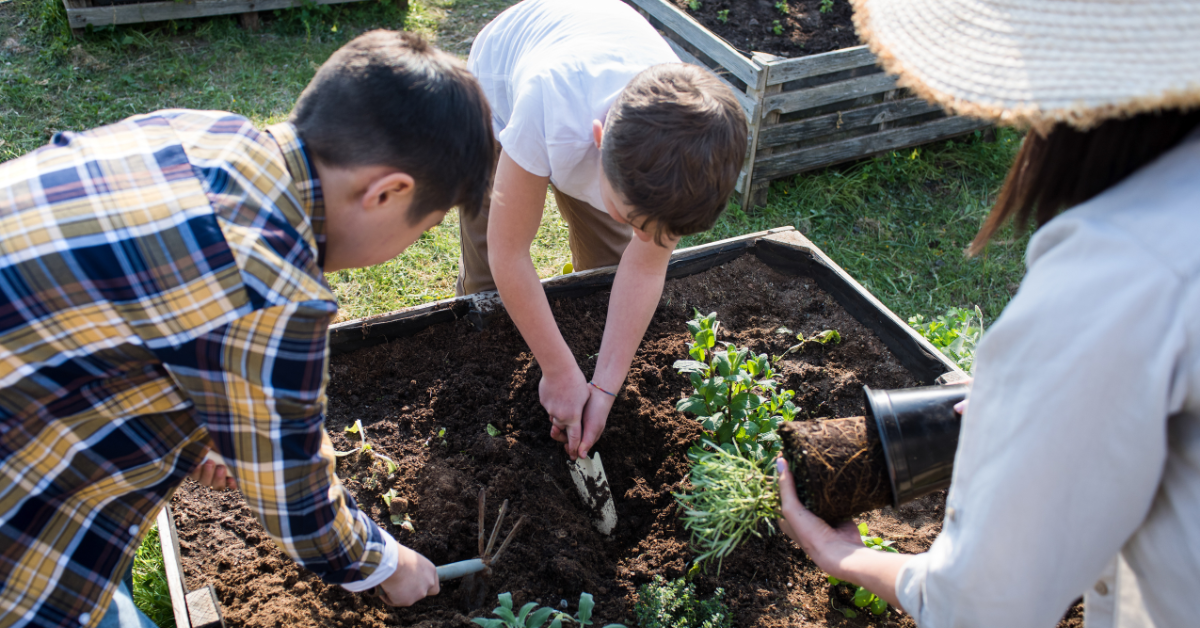
Encourage your child to dive into multi-step projects tied to real life—such as designing a family garden, creating a weekly meal plan and budget, or making a family cookbook.
Benefits: Projects provide authentic purpose, which increases intrinsic motivation. They also develop higher-order thinking skills, creativity, and perseverance. Research shows project-based learning fosters collaboration, critical thinking, and the ability to apply knowledge flexibly—skills employers and colleges value (Bell, 2010).
Cross-Curricular Connections
Teachers often weave multiple subjects into a single project, and you can do the same at home. Baking a cake, for example, combines fractions (math), chemistry (science), and reading instructions (literacy).
Benefits: Making connections across subjects helps children transfer knowledge, strengthens memory, and encourages flexible problem-solving. Studies indicate that integrated learning experiences create deeper conceptual understanding and support cognitive development (Darling-Hammond et al., 2020).
Real-World Application
Look for ways to bring academic skills into daily routines. Grocery shopping turns into a math lesson, cooking becomes a science experiment, and writing letters or thank-you notes builds authentic literacy practice.
Benefits: Real-life applications enhance relevance and motivation. They also build executive functioning skills such as planning, decision-making, and self-regulation—skills linked to long-term success in school, work, and life.
Collaborative Learning (Peer Interaction)
Even if you’re homeschooling one child, collaboration is still possible. Join a homeschool co-op, connect with online learning groups, or encourage your child to present projects to friends and family.
Benefits: Research demonstrates that cooperative learning not only boosts academic achievement but also fosters critical thinking, positive attitudes toward learning, interpersonal skills, and self-esteem (Yang, 2023). Additionally, educational reviews consistently show strong gains in affective, cognitive, and social domains through peer collaboration, reinforcing its value even in one-on-one or small homeschooling settings.
✨ Key Takeaways
- Engagement grows when children see real-world purpose in what they’re learning.
- Projects, cross-curricular activities, and daily-life applications strengthen memory, problem-solving, and motivation.
- Collaboration builds confidence, communication skills, and prepares children for real-world teamwork.
Let’s Stay Connected
If you’d like extra support, I work 1:1 with parents through my Parent Coaching Services and also offer workshops on creating thriving homeschool experiences. I’d love to help you make homeschooling not just workable—but joyful and engaging for your family.
References
Bell, S. (2010). Project-based learning for the 21st century: Skills for the future. The Clearing House, 83(2), 39–43.
Full text PDF
Darling-Hammond, L., Flook, L., Cook-Harvey, C., Barron, B., & Osher, D. (2020). Implications for educational practice of the science of learning and development. Applied Developmental Science, 24(2), 97–140.
Full text PDF
Learning Policy Institute. (2022). Educator learning to enact the science of learning & development. Palo Alto, CA: Learning Policy Institute.
Full text PDF
Yang, X. (2023). Cooperative learning: A historical review of research and practice. Frontiers in Psychology, 14, 1129.
Full text via PubMed Central