
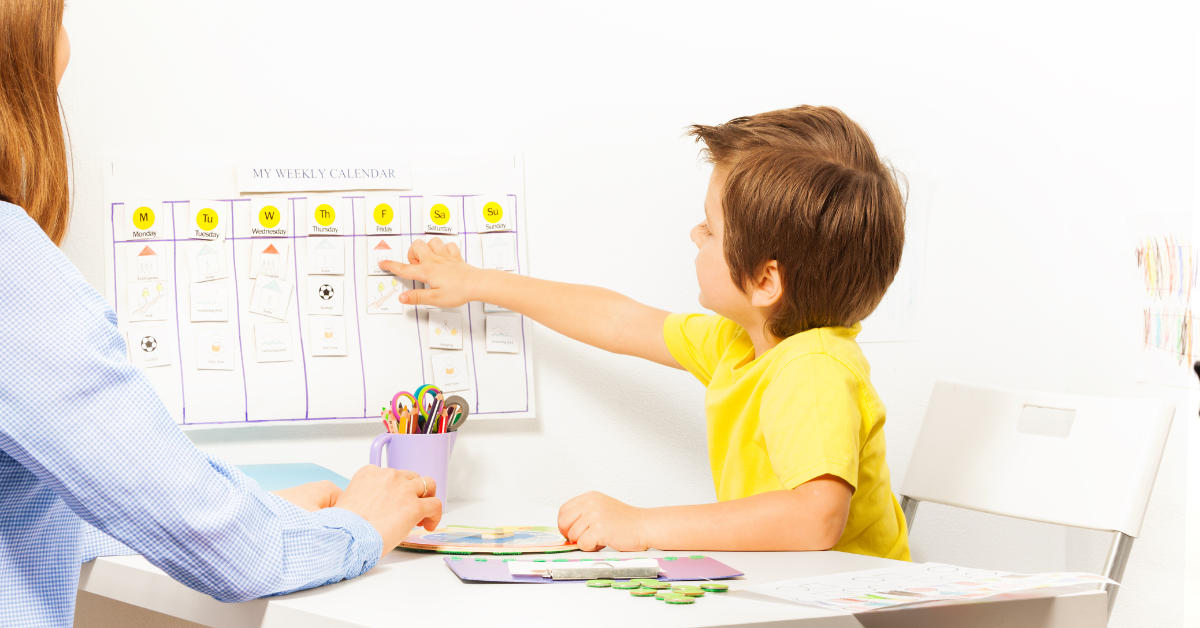
In the last post, Homeschooling Instruction and Learning Strategies: Bringing the Best of Both Worlds, I shared ways to make homeschooling engaging and effective. In this second post of the series Best Classroom Practices for Homeschooling, I’ll explore classroom management for homeschooling—a practical approach to bringing structure, motivation, and joy into your home learning routine.”
Homeschooling offers incredible flexibility, but children still benefit from routines and structure. Classroom routines and procedures do more than keep students on task—they prepare children for lifelong skills. Early experiences with organization, goal-setting, and predictable schedules transfer into college, careers, and adulthood. When children know what to expect, they learn to manage time, meet goals, and feel proud of their accomplishments.
Routines & Structure
Predictable schedules reduce stress and help children self-regulate. At home, this can mean:
- Yearly, monthly, and daily calendars: Outline the big picture (year/semester), weekly focuses, and daily expectations. This provides benchmarks and a sense of accomplishment.
- Daily routines: While each day might look different, maintaining a morning routine and set times for key subjects—like literacy, math, and science—helps children anticipate and manage their day.
- Flexibility within structure: Children should still have room to explore, pursue inspiration, and follow their curiosity. Routines provide the framework without limiting creativity.
Research note: Consistent routines support executive functioning, self-regulation, and emotional well-being (Blair & Raver, 2015).
Choice & Autonomy
Choice is an essential piece of classroom management for homeschooling, helping kids feel empowered. Classrooms use controlled choices to encourage ownership and reduce resistance. At home, you can do the same:
- Offer options: “Do you want to read outside or inside?”
- Let children select roles for special activities or projects.
- Encourage them to plan small steps toward personal learning goals.
Giving children autonomy fosters intrinsic motivation, engagement, and self-confidence.
Movement Breaks (Brain Breaks)
Teachers often switch activities to support attention and engagement. At home:
- Include short movement breaks every 30–60 minutes.
- Encourage stretching, walking, or five minutes of active play.
- Movement helps children process information and stay energized.
Research note: Frequent physical activity improves attention, mood, and academic performance (Donnelly & Lambourne, 2011).
Smooth Transitions
Transitions reduce downtime and maintain focus. At home, try:
- Signals like music, timers, or hand claps.
- Visual cues (charts, checklists) to show what comes next.
- Celebrate the completion of tasks to create excitement and momentum.
Classroom Jobs → Household Roles
Children love feeling useful and being part of the process. Assign small responsibilities that:
- Track supplies or materials.
- Set up and clean up learning spaces.
- Manage simple classroom-like tasks at home.
Not only does this reduce parental workload, but it also builds ownership, responsibility, and pride in their learning environment.
Tip: Ask children what role they’d like for special projects or outings—you’ll be surprised how enthusiastic they are to help.
Bringing It All Together
Even at home, adapting classroom management practices helps children:
- Develop time management and self-regulation skills.
- Take ownership of their learning.
- Stay engaged and motivated.
- Build lifelong habits that extend beyond the homeschool environment.
Routines, predictable schedules, choice, movement breaks, smooth transitions, and household responsibilities combine to create a balanced, structured, and joyful homeschooling day.
👉 Let’s Stay Connected
If you’d like extra support, I work 1:1 with parents and also offer workshops on creating thriving homeschool experiences. I’d love to help you make homeschooling not just workable—but joyful and engaging for your family. Learn more about my parent coaching services here.
References
- Blair, C., & Raver, C. C. (2015). School readiness and self-regulation: A developmental psychobiological approach. Annual Review of Psychology, 66, 711–731. https://doi.org/10.1146/annurev-psych-010814-015221
- Donnelly, J. E., & Lambourne, K. (2011). Classroom-based physical activity, cognition, and academic achievement. Preventive Medicine, 52(Suppl 1), S36–S42. https://doi.org/10.1016/j.ypmed.2011.01.021
- Marzano, R. J., Marzano, J. S., & Pickering, D. J. (2003). Classroom management that works: Research-based strategies for every teacher. ASCD.